

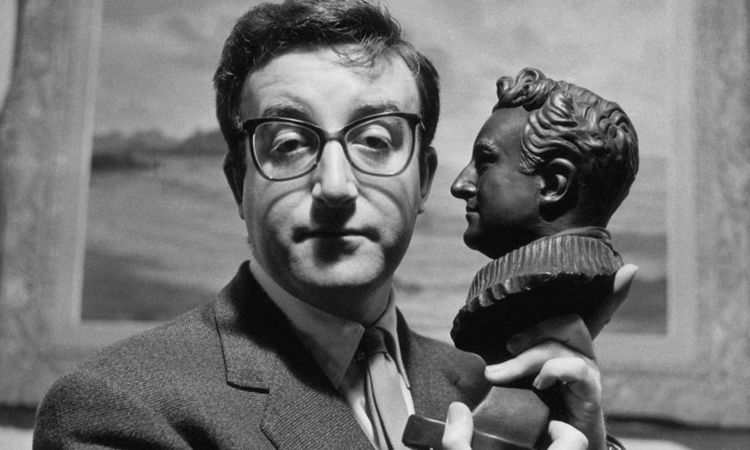
From the moment we enter the movie theater, we step into a new world in the magical atmosphere of 7th art. At the door of the hall, the fights of daily life are left behind and we find ourselves in completely different lives from the moment the movie starts. We can be rich, poor, full of love or hate in our own life, it doesn’t matter, as long as we sit in that seat, we become ‘He’ if the character on the screen is ‘Who’. We rejoice, grieve, love or hate that character. How can we explain this situation better than Yusuf Atılgan; ‘In our time lives a short-lived creature unknown to past centuries. A person out of the cinema. The movie he saw did something to him. He’s not just a self-interested person. He is at peace with people. It is hoped that he will do great things. But it dies in five to ten minutes. The street is full of people who do not leave the cinema; With their sullen faces, indifference, and sneaky gait, they take her between them and dissolve her.’ But this transformation is not limited to the face of the screen that reflects on the audience. Those in front of the camera, namely the actors, take on a new character and transform with each new scenario. It no longer matters what kind of person that actor is in his own life; Whatever character written in the script is, the actor turns into him, he becomes. He laughs, cries, loves or hates it like the character he plays. A motion picture changes and transforms the lives it touches on both sides of the screen, albeit for a certain period of time. In this article, we will deal with the other side of the veil, trying to understand a life transformed with each character he plays in front of the camera; The life of Peter Sellers, who said, “I play my roles very well in movies, because I have no personality, there was a me behind my mask before, but I had it removed by surgery”…
Peter Sellers was born in England in 1925 as the only child of a stage artist mother and a pianist father, despite the widespread belief that he was French due to his magnificent performance as French Inspector Clouseau in the Pink Panther series. His real name was Richard Henry, but his family called little Richard by the name Peter, which they gave to their child, whom they lost in infancy, and he was called by this name throughout his life. This situation is not a very unfamiliar situation for Turkish readers reading this article. There is always someone we know who bears the name of an older sister, brother or uncle who died at a very young age. This name choice, which seems very ordinary and insignificant, may actually have a deep meaning for the person who bears that name. Every person comes to the world as a new ‘living’ and wants to be perceived as such. Otherwise, to think that you came to life to fill someone else’s place or to keep someone else’s spiritual memory alive can cause deep fractures regarding one’s place and importance in this life. As a result of such a situation, the person named, most likely, learns the story of his name in family conversations at a very young age and may enter into questions about the place of his existence in the family. As a result of this questioning, the child may think that he is not loved ‘as himself’ but that he is loved as long as it reminds him of the existence of someone else, and this situation can turn into thoughts of worthlessness that will affect the person’s whole life, thus laying the foundations of many psychiatric diseases, especially depressive disorders. In such a case, it may not be enough for a person to just exist, so that the person may feel obliged to prove that he exists only as himself, not as a broken memory of someone else. This sense of obligation can turn into exaggerated attitudes and behaviors to convey the message that I am here and I am here too. No matter how old he is, he is a child trying to show those around him that his existence has meaning only when he is accepted as himself. We can often see traces of this in Peter Sellers’ life story. For example; Sellers wants to convey the message that I am here by getting the most beautiful woman in the environment, which for him is Sophia Loren, who was perhaps the most attractive woman in the world at her time. When her little girl asks one day, ‘Daddy, don’t you love us anymore?’ she says ‘I love you but I love Sophia Loren more’, or she wakes up her son in the middle of the night and asks, ‘Do you think I should divorce your mother?’ with similar attitudes to his wife. He behaves and tells his love for Sophia Loren as if he was a friend, not his wife. All these behaviors are pure and belong to the mind of a child, no matter how old he is. She is a little, unhappy child who has never grown up. He gets married, has children of his own, but approaches his children as a peer, not as a parent. When his son damages the paintwork of Sellers’ newly bought car, he winds up in his son’s room and in turn crushes his son’s toys by jumping on them, because, according to Sellers, his son damaged his toy and he gets even by damaging his son’s toys.
Sellers was a guest on The Muppet Show in 1977. While having trouble deciding which costume to wear, Kermit; He says, ‘You don’t need to stress, we’re backstage, you can be yourself here.’ Sellers replies, ‘I’ve never been myself, Kermit.’ In fact, this answer is like a summary of Sellers’ life story. It is a boat, a boat in which all the characters he plays are filled, but when those characters get off the boat, only an empty boat remains. Sellers seems to lack a point of reference from which he can evaluate himself. In the psychiatric literature, the organized integrity of the individual’s emotions, attitudes and behaviors is called the self. The self is the center of reference for one’s self. It is the view of the subject ‘I’ about the object ‘I’. The mental picture of oneself is the reference point. Early parental relationships play a key role in the development of this reference point, the self. At this point, in order to better understand Sellers’ self-structuring, it is necessary to mention his relationship with his mother.
Peter’s mother, Agnes Doreen “Peg” Sellers, is a Jewish stage performer. Agnes is a devoted mother to her son, of course, the fact that she lost her first child has a big impact on this, as she has always called little Richard ‘Peter’ by the name she always thought of giving to her deceased first son. When the definition of “a devoted mother”, which seems to be innocent, is examined in depth, it can be seen that it can actually leave not-so-innocent effects on a person’s life story.
Imagine a newborn human cub, unable to perform basic vital functions such as feeding, relocating, cleaning, protecting from dangers without the help of others. Considering this biological inadequacy, it is inevitable for a human infant to develop an attachment to its caregiver from the first days of its life. The caregiver is not only a resource that satisfies physical needs, but also the first object that meets social needs. This first object is often the mother. The mother is the first dependency of the human offspring, which is connected with ties that get stronger as the needs are met. This bond is the first indicator of how change-resistant personality patterns that affect a whole later life will form.
The mother’s task is not only to meet the needs of the baby, but also to provide the baby with experiences of solitude and calm environments where he can stand alone so that he can develop a healthy ‘self’. Only in this way, the mother, who is the first object, turns into a transitional object and becomes ‘other’. This break is necessary for self-development. If a baby is not allowed to gain his own experiences in his development, it will not be possible for him to develop a healthy self, which is a set of experiences of his own. Think of an overprotective mother, a mother who has just learned to walk, who is constantly chasing her baby, who is trying to stand by staggering, holding her without falling, never letting her stand up after falling… She cannot develop a knowledge based on her own experience that it is safe, what she knows is only her mother’s experience, what is dangerous and wrong for her mother is dangerous and wrong not because she has experienced it herself, but because her mother thinks so. The reactions he gives when he encounters other objects are not experienced by himself, his reactions are shaped by his mother’s attitudes. In such a developmental system, the reference point is the mother. In other words, there is no reference point of one’s own, a healthy self-development, and as a result, it is inevitable for a person to be a feather in the spectrum of psychopathology from neurosis to psychosis.
Peter Sellers’ penultimate film is a masterpiece known to moviegoers as ‘Being There’. Sellers wanted to act in the movie adapted from a novel so much that he begged Jerzy Kosinski, who also wrote the script of the book, to play the lead character Chance. The movie is about Chance, who spent his whole life in a room reserved for him in the garden of a mansion, without any contact with the outside world, and everything he knows about the outside world consists of what he learned by watching the television his boss gave him, after the death of his employer, Chance was publicly condemned to wander the streets confused and aimlessly. His life story goes back to when he was proclaimed ‘the unpretentious and pure new representative of wisdom’. If the mother figure is substituted for the television in the life story of this character, who does not have a past and does not worry about the future, and whose views about the world consist of what he watches on television rather than his own experiences, it can be better understood why Sellers wants to play this character so much.
As a result, when the life story of Sellers, who took his place among the unforgettable in the history of cinema and caused people to leave the movie theaters with a smile on their faces, is examined on the other side of the screen; Behind his smiling mask there will be a sad child with an empty painting hanging and never allowed to grow up.
King regards to Peter Sellers,