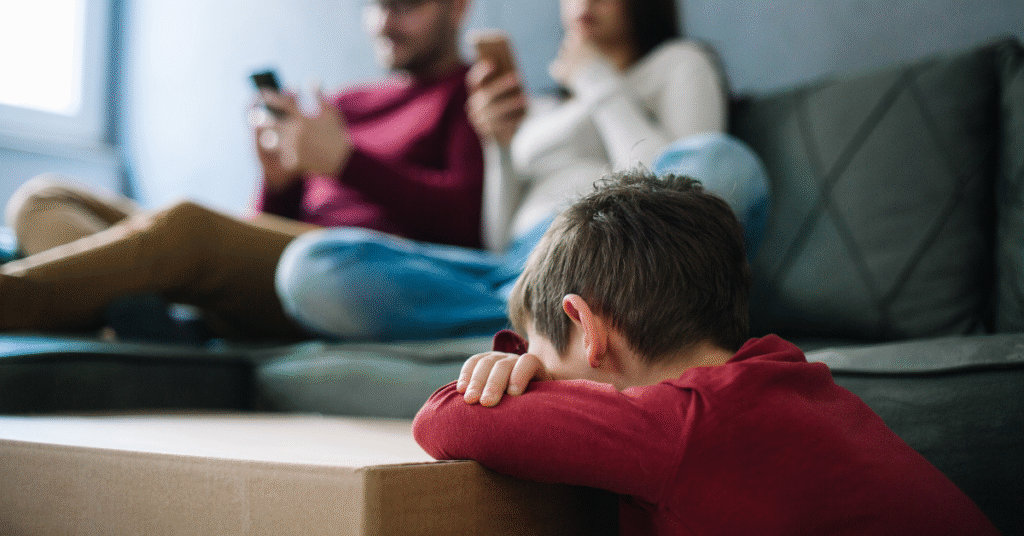

Social anxiety/Social anxiety (social phobia) is an intense fear and anxiety observed in social environments, which is included in the classification of anxiety disorders. It is called a significant emotional difficulty that prevents people from performing in the desired direction in their daily lives.
It is normal for people to be a little shy, to blush in some situations because they feel embarrassed, to sweat in their hands, to get excited when speaking in front of a crowd or giving a presentation. The hormonal activity secreted in the body at that time helps to keep the attention on the task at hand and to focus. A certain level of anxiety increases success because it is the driving force that drives the individual, but when anxiety is too much, it becomes difficult to control and puts the person in a difficult situation.
Social Anxiety Disorder in Children (Social Phobia)
In situations that involve social interaction (public speaking, making a presentation, meeting new people), the thought of being scrutinized by others (such as eating in front of people) is quite dominant. People with social phobia often care too much about what others think of them. It is accompanied by the anxiety of being judged and humiliated by others. Such as, “I will be embarrassed, everyone will laugh at me, if I slip up, everyone will make fun of me, they will not like me, I look stupid, I will say something stupid”. During any action performed in a group, blushing, sweating, shaking, and the fear of doing something wrong are frequently observed. Due to this fear, the person may avoid actions that they have to perform in a group (such as making a presentation in front of a group) or situations that require social interaction (such as telling where to get off on public transport or asking someone for directions). In situations where they have to, anxiety symptoms may appear in their body (such as sweating, shaking, palpitations, hot and cold flushes, difficulty controlling their breathing). The incidence is around 2%, more common in women, and occurs more often during adolescence. In cases lasting longer than six months, psychological support is necessary.
Chronic depression or generalized anxiety disorder are among the most important problem areas that accompany social anxiety. In some cases, substance abuse is also seen to support coping skills.
Causes of Social Phobia in Children
Having a sensitive and sensitive temperament and having a parent with anxiety disorder in the family make the child genetically predisposed. Not only genetic predisposition, but also behavioral patterns learned within the family cause the child to perceive external clues as “danger signals” and become anxious. There are also studies showing that excessive activity in the amygdala, the brain region that controls fear/anxiety, increases anxiety in social environments. Psychological and environmental factors suggest that experiences learned in previous lives make the child more anxious. The “anxious” trait is passed down through generations to a child who grew up with overly controlling parents or has an anxious parent in the family history; the child may feel uncomfortable in social environments and may develop a social phobia in the future.
Treatment Approaches in Social Phobia
Social phobia is an important childhood/adolescence problem that negatively affects academic skills in many children, reduces social interaction, and brings about various emotional difficulties due to performance anxiety. This situation, which negatively affects children’s self-confidence and self-esteem, causes many children/adolescents to withdraw due to fear of receiving a negative reaction and being embarrassed, causes them to make negative attributions about themselves, and can lead to depressive symptoms.
In medical treatment, anxiety-relieving medications are used to alleviate the relevant symptoms and reduce the child’s anxiety. In drug treatment, the child must be examined by a specialist physician (psychiatrist) and the medication must be prescribed by a mental health specialist physician (psychiatrist). The appropriate treatment process is initiated by taking into account the child/adolescent’s complaint and developmental history.
In addition to medication support, psychotherapy is an important treatment protocol that provides effective results in social phobias. Social Skills Training, primarily Cognitive Behavioral Therapy, is among the most frequently applied intervention methods. Informing the child about anxiety, informing the family and school (psychoeducation), relaxation and breathing exercises, positive and encouraging conversations, problem-solving skills (related to socializing and making friends) and basic social skills (greeting, shaking hands, taking the first step towards becoming friends, etc.) are worked on. Family and school support is very important in this regard.